

Deserts, Death Tunnels, and Borderlands
Liam’s ride turns perilous and profound as he crosses deserts, borders, and war-scarred regions, discovering awe, danger, and unexpected humanity.
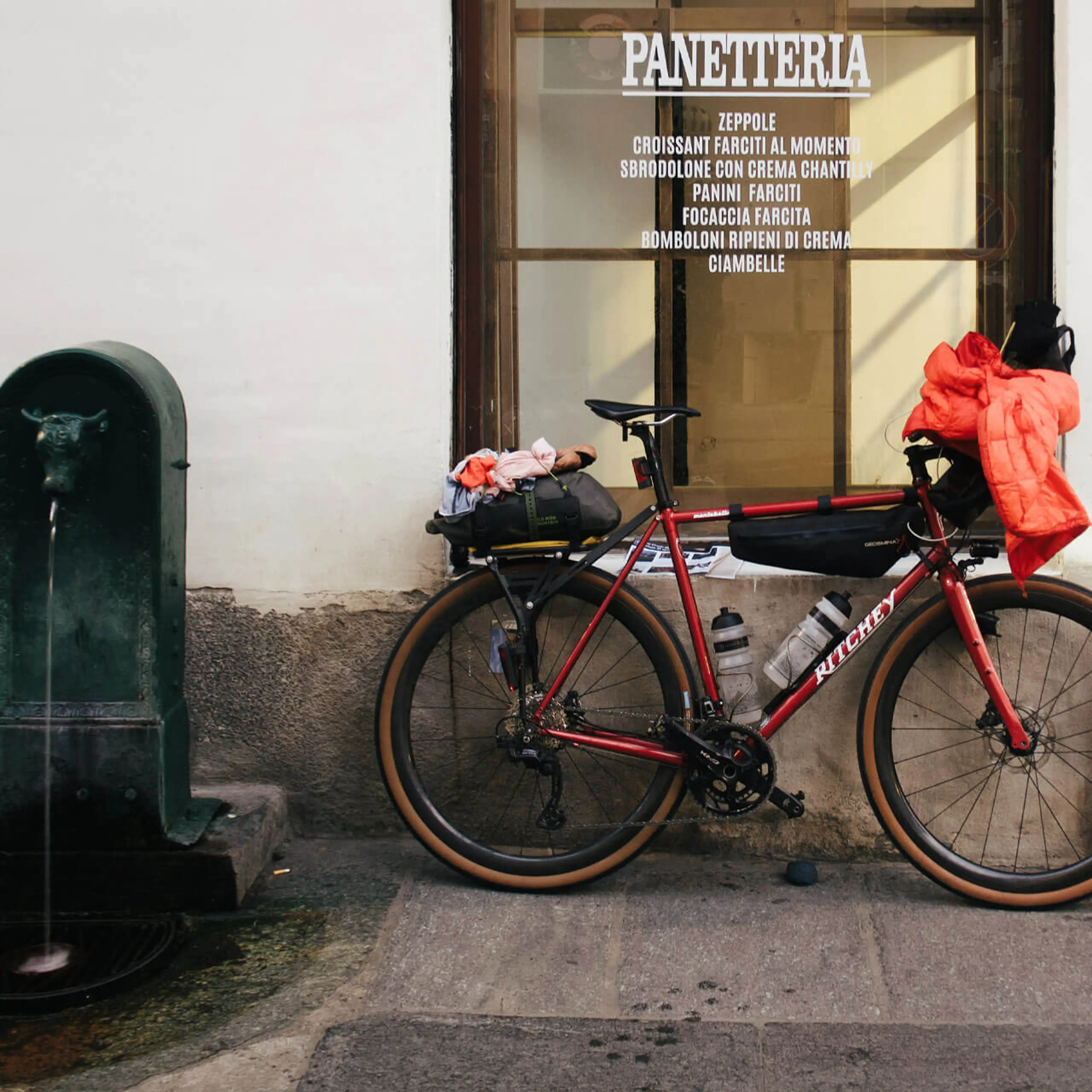
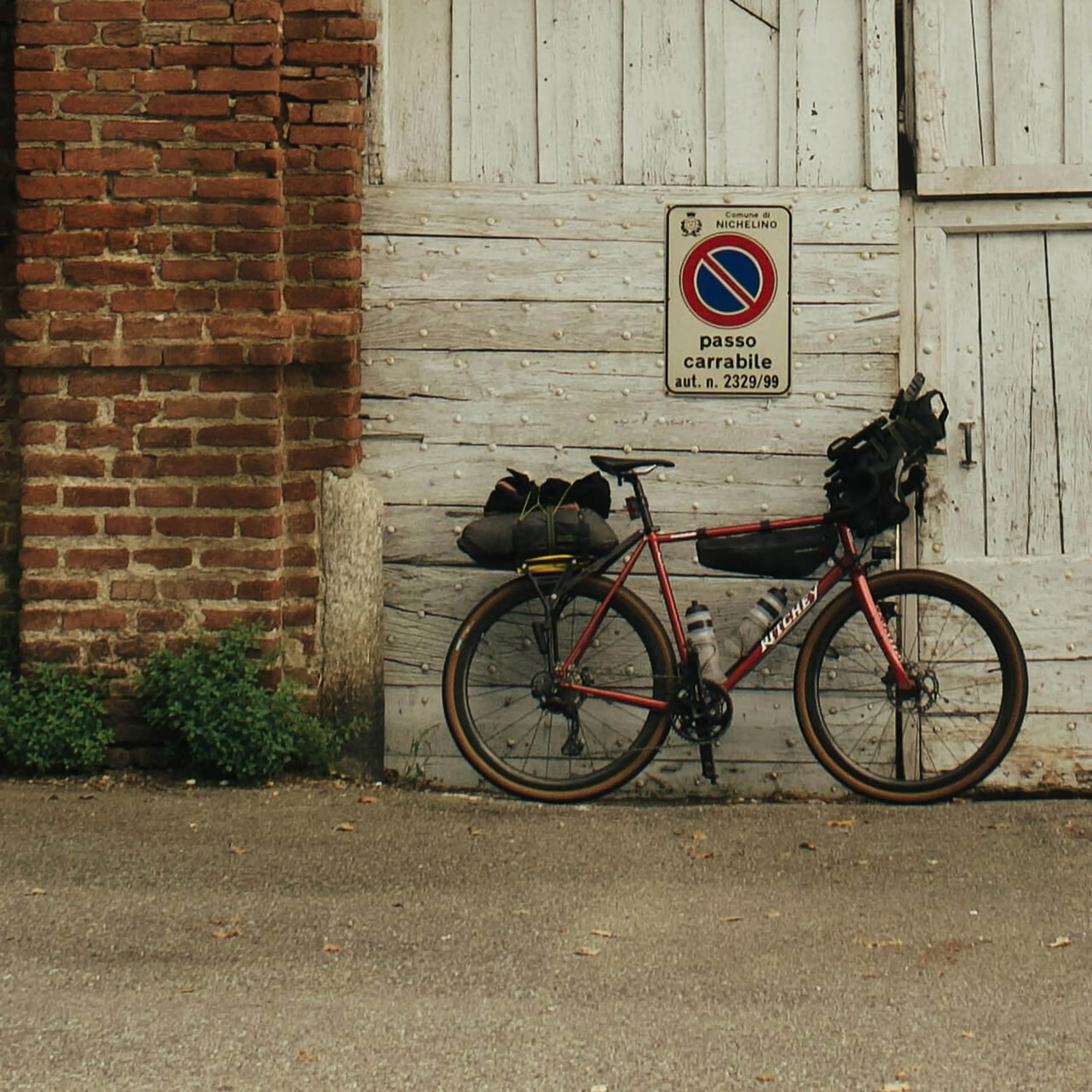
In Part 1, Liam set out from Paris atop his Ritchey Ultra to cross two continents at bike speed, which “forces you to actually travel, to cross land and borders and engage with communities rather than drop into cities with a plane and claim you have seen a country.” With Europe at his back, Part 2 of Liam’s ride turns into an adventure that’s at times threatening and enviable (maybe both at once). Read on…
Words and images by Liam Crozier
“Months have passed since I got home and time still feels abstract. I cycled through two continents, crossed two alpine ranges and many deserts that spanned multiple countries. I have tried to help people who were dying on the side of the road; I’ve dodged trucks passing each other on narrow roads; and I’ve navigated a tunnel known as ‘the Tunnel of Death’. I found myself at the gates of what appeared to be a rebel military camp in rural China; I’ve waved to Taliban soldiers and conversed with the heavily armed Tajik teenagers who patrol the border in teams. I have cycled paths I couldn't find behind overgrown bush and descended valleys that — for thousands of years — people did not want to be found. I have seen things and been to places that movies and books say would change me, and yet I am still me and I still want to ride every day, chasing the sunset with time as an abstract, determined only by the light gifted in the day and the miles my legs will let me ride.”
— Liam Crozier, Wellington, New Zealand, November 2025

A de facto domestique and death in Uzbekistan
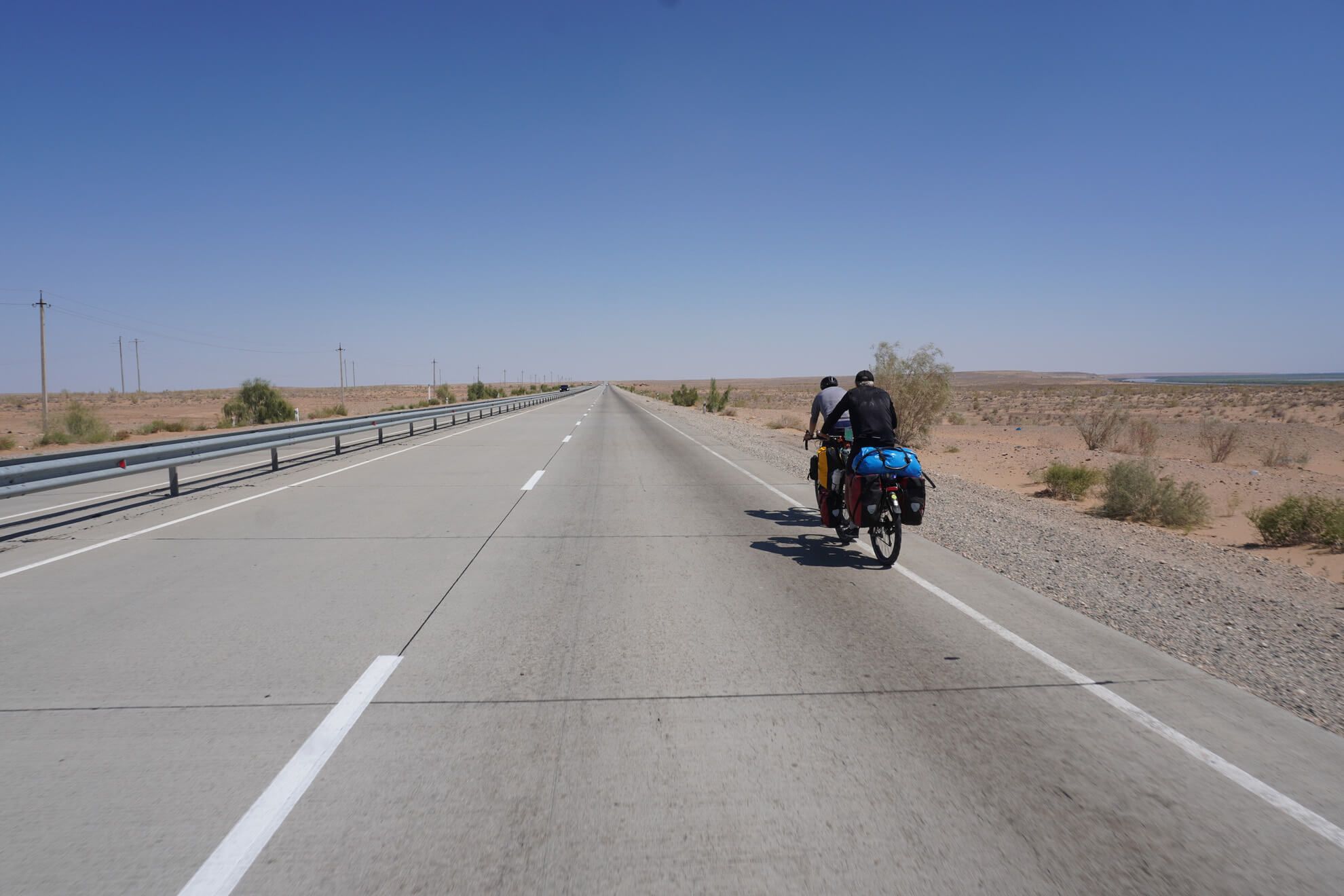
Crossing the border into Uzbekistan was another culture shock on a sleeper train. At least now I was sharing the trip with other cyclists as the wars north and south had turned this route into a thoroughfare for hitchhikers and cyclists. I joined an English doctor of similar age, and we agreed to help an older cycle tourist get through the desert. I joined their plans too at a slower, more touristic pace and became the team domestique in the persistent winds.
“It was clear to us that we had witnessed two people living their last moments.”
The cities of Uzbekistan are beautiful, but the roads are treacherous. This is the land of cheap Chevrolets and, after being passed at an unbelievable pace by one, we soon came across it again in a wreck of black metal and a cloud of thick sandy dust. A bus too had been run off the road but the Chevrolet bore the damage — especially where the passenger’s head had been driven forward and the front wheels backwards. A crowd had formed as lines of cars stopped on the road and, in the intensity of the desert heat, an intensity of action began. As I was with a doctor, we joined the growing crowds and palpable agitation. There wasn’t much to do, both people were unresponsive and struggling to breathe, blood clotted the sands and the women lay still with a laceration down to the skull, evidently from the windshield and contorted metal behind her. This was a place far from a good hospital and real ambulance and as the crowds did all the things they should not have done: dragging each victim into another car, it was clear to us that we had witnessed two people living their last moments.
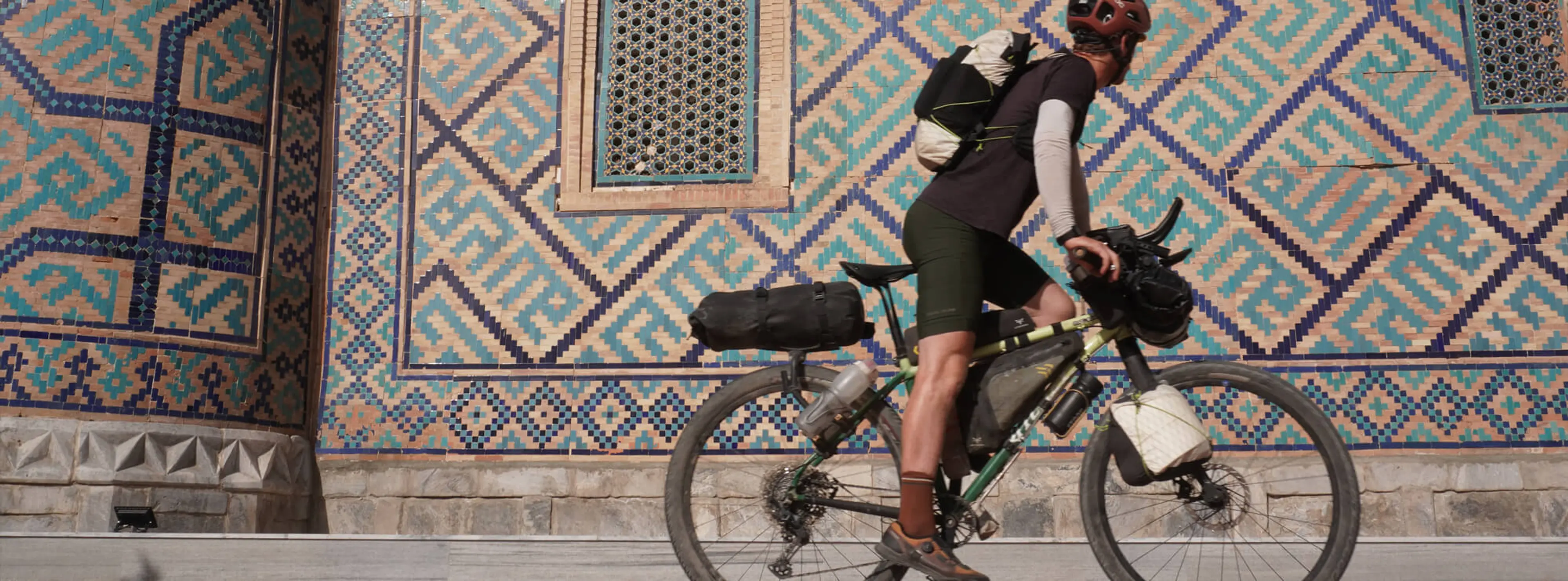
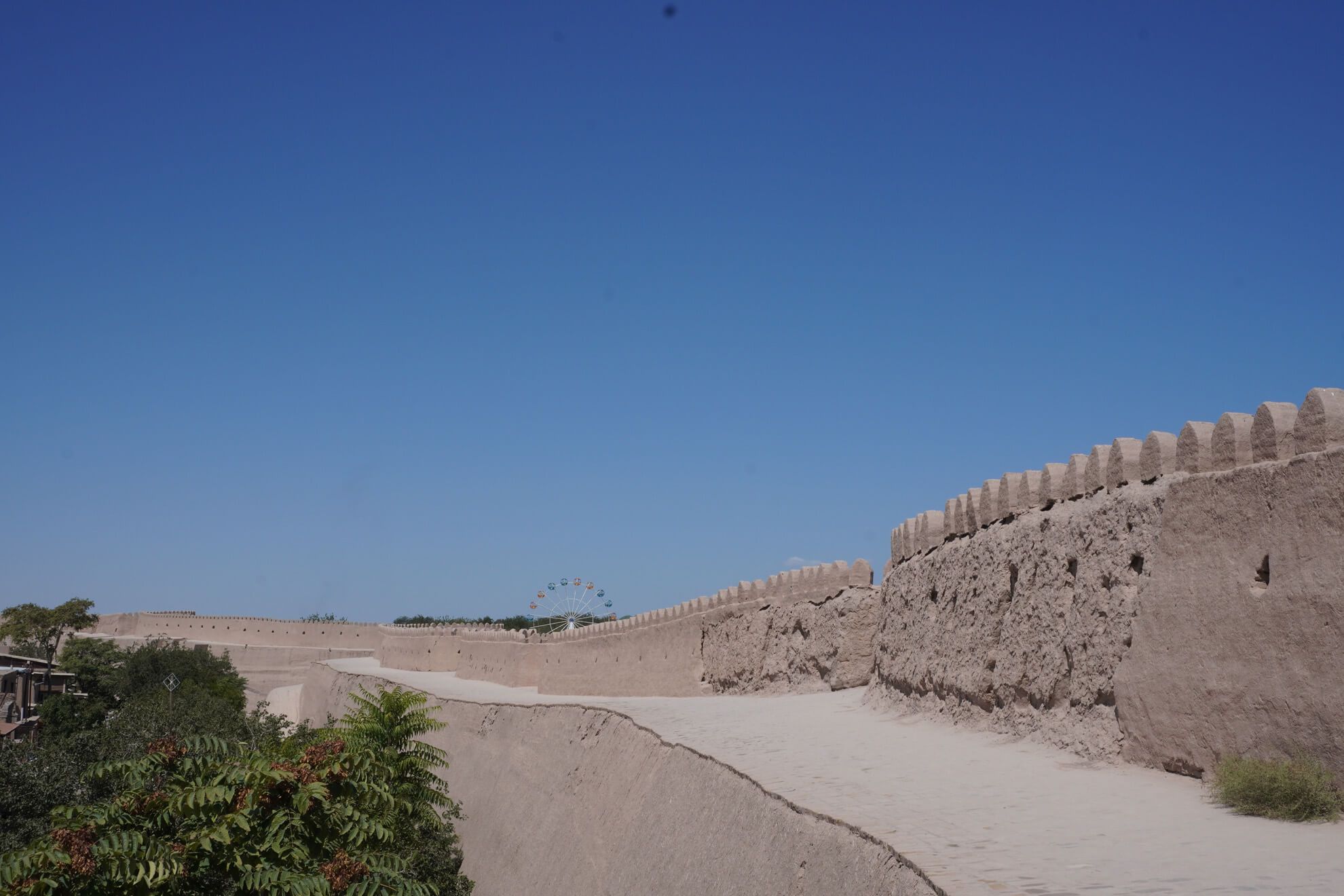
The ancient cities of Uzbekistan were in stark contrast to the rest of the country. Tracking along a dirty brown river system, they’ve literally been desert oases for travelers and invading hordes for thousands of years. As you draw closer to these cities the deserts seem to morph into lush green farms, then crescendo upwards until there are towering angled walls and gates decorated in ornate tiles. Small sand houses stretch out from the central mosques in every direction here; old merges with new as the country holds onto the relics that either survived the Mughals or were rebuilt after them. They got grander the farther east we cycled, finishing at the grandest and by far the tackiest of tourist traps in Samarkand. I personally found the extravagance and capitalism here uncomfortable and was happy to move on to higher elevations where we could see mountains through the thick muted air.

How to be utterly alone in a crowd
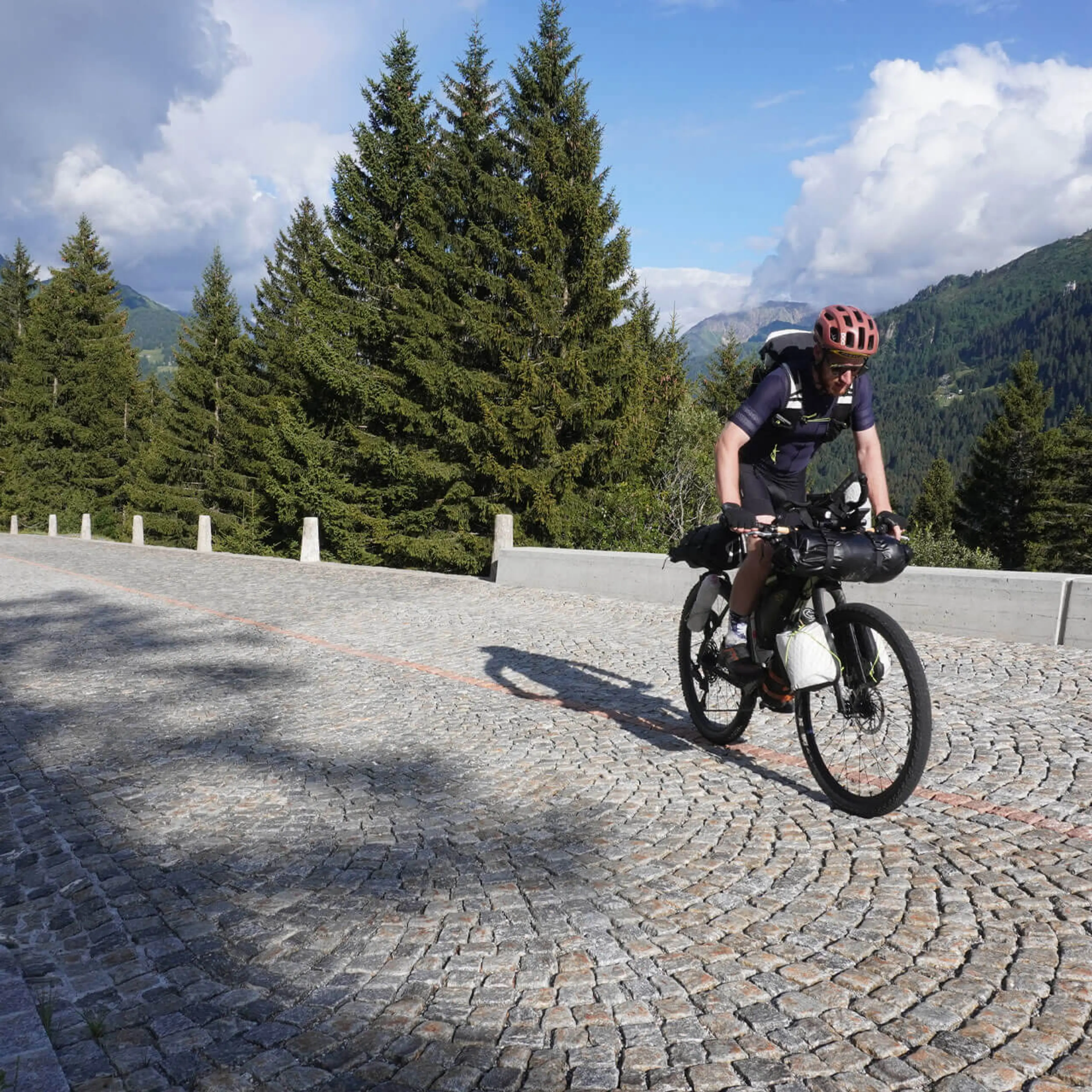
It was here amidst the throng of the city, the extravagance and fakeness of tourist centres even among new friends that I started to feel most alone. I thought more of my home's unparalleled connection to nature, the network of public huts and trails to be alone in, and of course the diversity of birdsong during the dawn chorus. I began seeing less beauty in every place I went. I became fatigued by the constant attention, repetition of questions and squealing children so excited to see me. This was confronting and sad to realise — I noted — that after three weeks the novelty had worn off and routine had set in. I was now taking it all for granted and that wasn’t the point of such a trip. Although this was an ever steady presence in my days, the excitement also grew as the heightening elevation thinned the air and at times pockets of blue sky and mountain tops would break the otherwise grey and brown horizon.Through the small villages and into dry dusty mountains that regularly change colour from iron black to copper red and golden sand, the feeling totally changed. The feeling everywhere was totally different from one country to the next. Tajikistan had a sense of freedom even amidst the insecurity of the leader. Like most dictators, his face was everywhere on billboards and monuments, but even in this megalomania, the women looked up and smiled or said “Hello” and young girls wore shorts. To my western sensibility this was a delight compared to the other Muslim countries I passed through, and as I looked past the military patrols of Tajik boys, the gun emplacements, barbed wire fence, and over the river to Afghanistan, it reminded me that these "freedoms" are uncommon and something to relish.
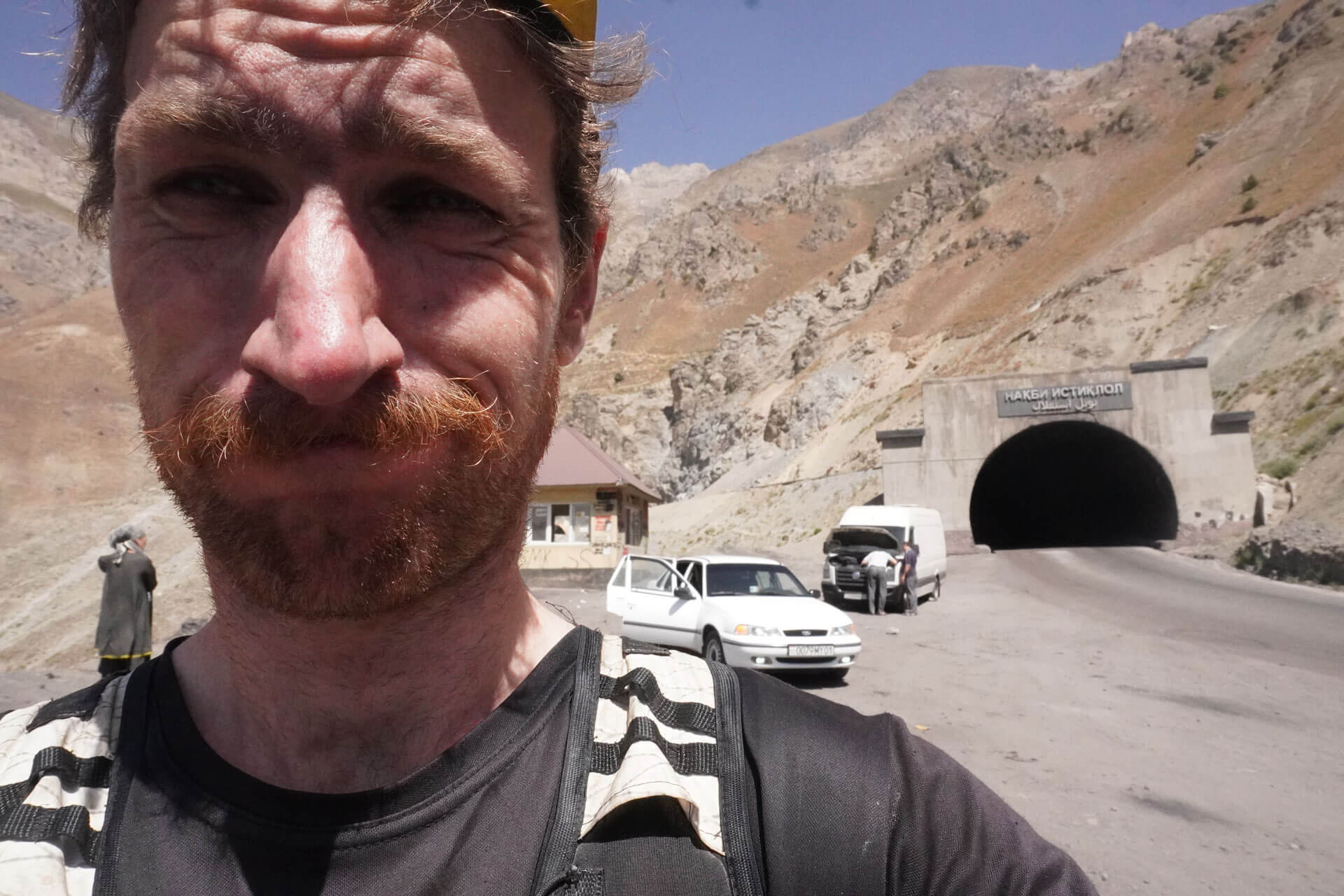
The Death Tunnel
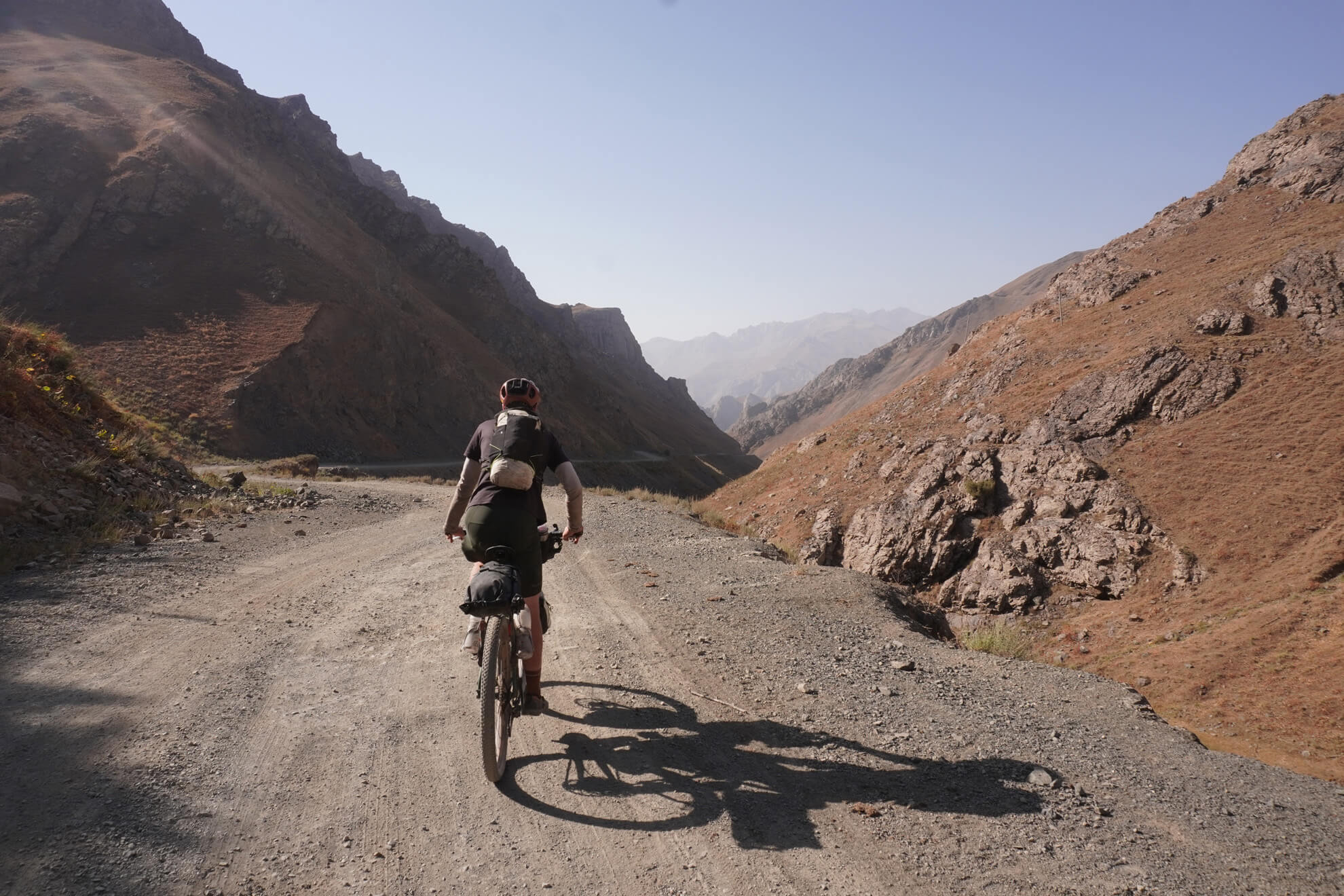
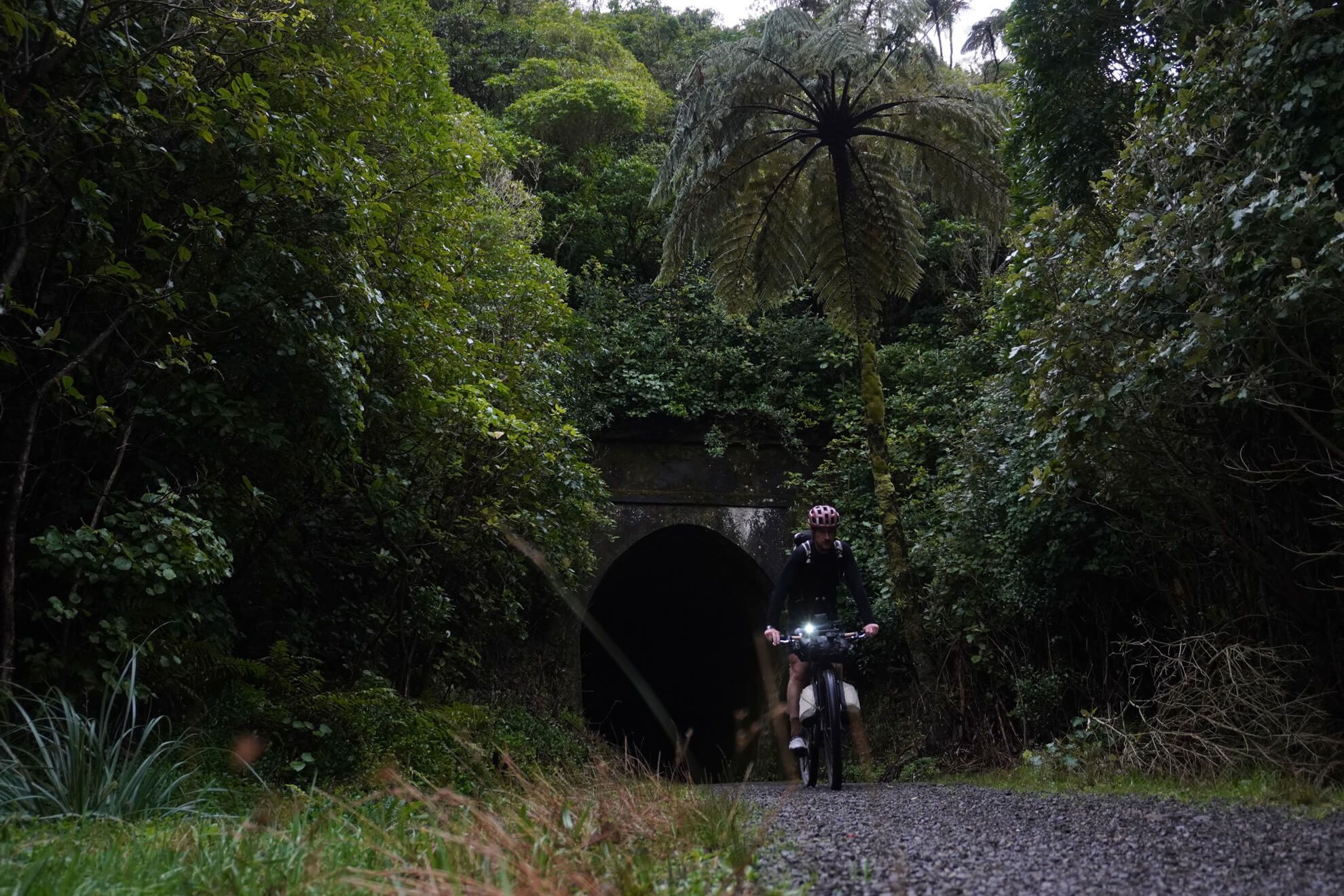
I followed valleys and headed deeper into the mountains, aware that soon I would reach the Death Tunnel. I had been warned about this unfinished 5-kilometer (3-mile) stretch of barely lit and unventilated tunnel. The road leading up to it was bad enough with trucks passing each other on blind corners — this was not uncommon inside the tunnel either. This was an uncommon experience for me, and an experience I wanted to risk. Lights on, face covered, I rolled down to where the billowing smoke escaped from the hill and waited for what I perceived to be a gap in traffic before tucking in. The first two minutes were pure regret as the thick smoke enveloped me, filled my eyes and blotted out my light’s beam. I could see maybe 10 meters (33 feet) in front of me, which wasn’t enough, given the randomly spaced potholes As I settled in and went a little farther down, the air thinned slightly and I decided to ride hard, as hard as I could safely. With the normal noise of cars now amplified into far off impending rumbles, it was more fuel for fear, but eventually I emerged into a bright mountainous vista and sat down to eat, now dressed in a layer of black soot. Like most cities now, Dushanbe was a city I was happy to leave. A thought began growing within me the more places I roved. I began to think of cities not as places for people to dwell and thrive in but rather as machines or fuel for businesses to grow. By exploiting our natural desires and need for community, this growth comes at the expense of humans and makes us think that cities are the only place for these things. Instead, they strip us of our identities, making us into a monoculture and pull us from the truly nourishing communities that make us complete. Cities begin to feel the same: the pizza shops and fast-food joints, the same brands and clothing, the same peacocking people. I wanted to see countries and cultures; Dushanbe wasn’t giving me this.
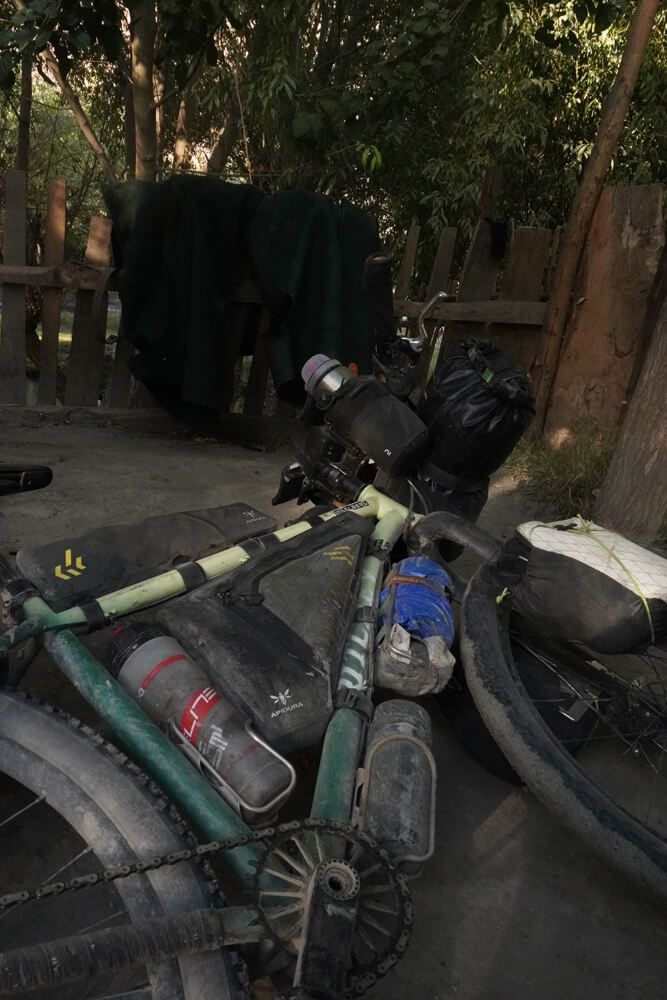
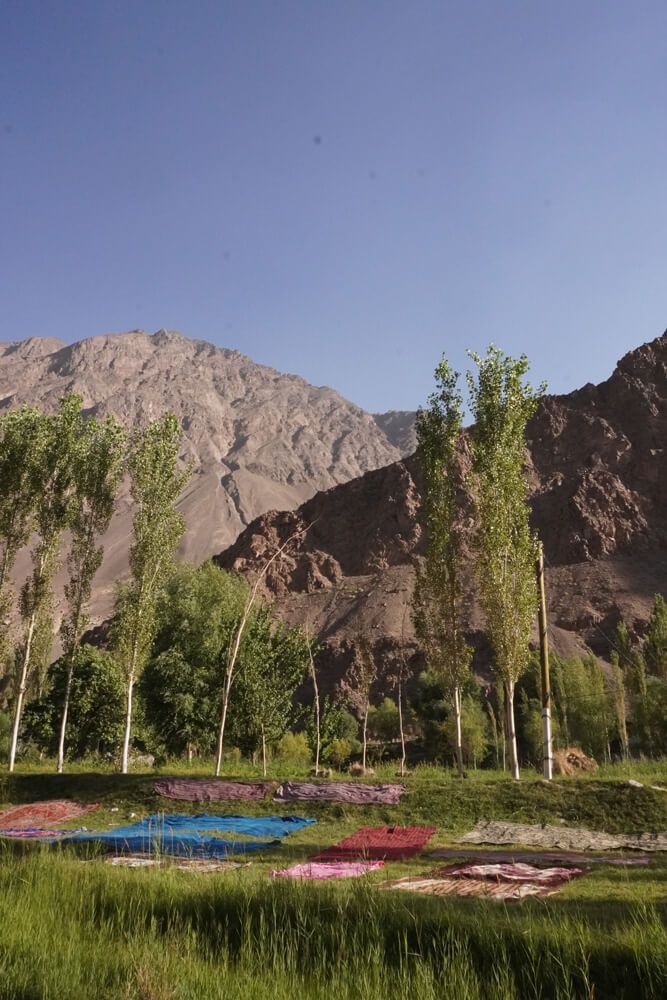
Bartang Valley, Tajikistan
At least from here, the mountains got better, the roads quieter and life seemed more real. There were still lakes polluted by mining and roads that went from perfection to potholes in the same stretch, but now there were real people. I had to stop for shepherds as flocks of sheep and goats overran the roads and up the riverbanks. After meeting a Frenchman also with the seemingly uncommon wisdom to ride a mountain bike in these mountains, we paired up to tackle the Bartang Valley and together, we had so many experiences it would be too many to relate here.
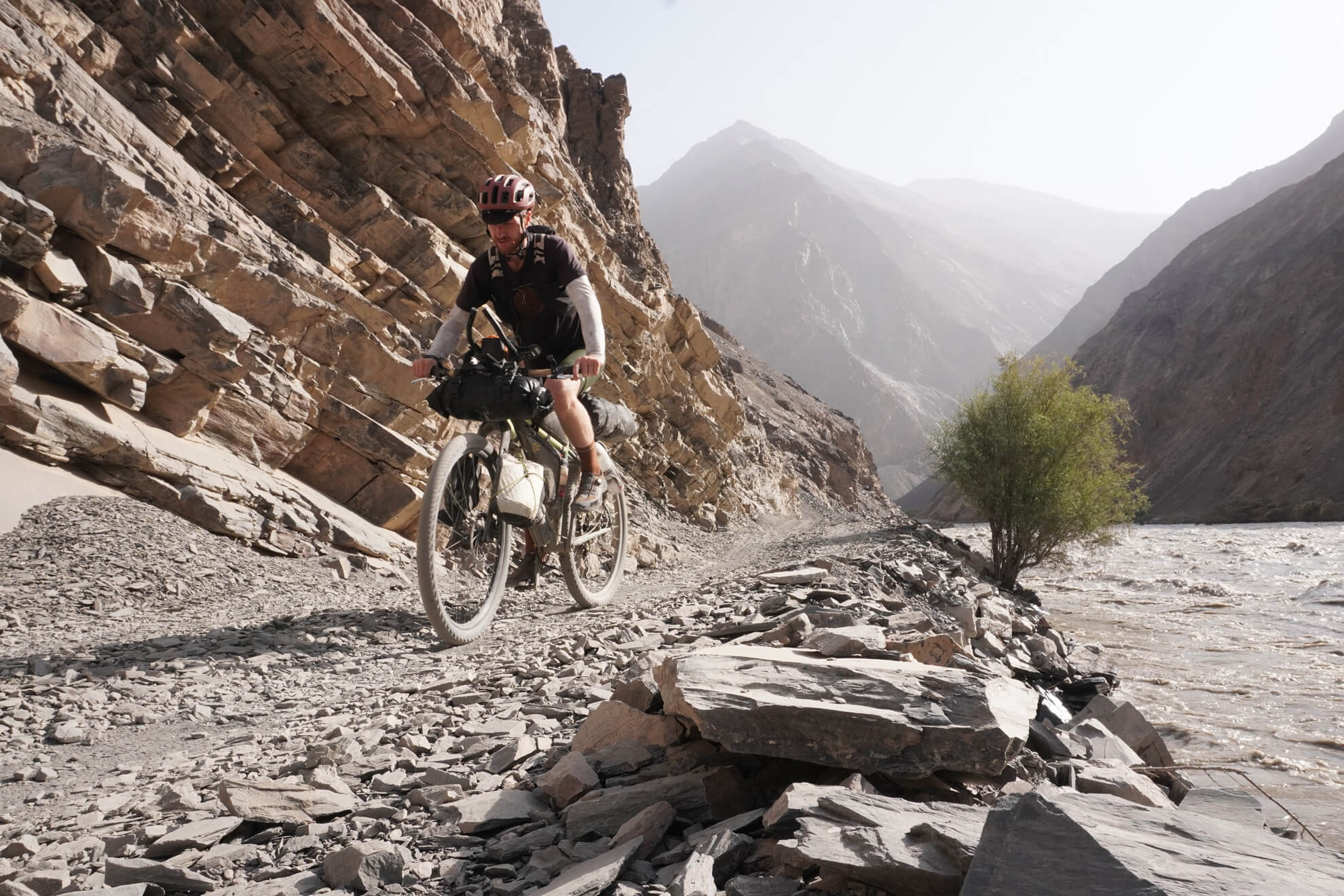
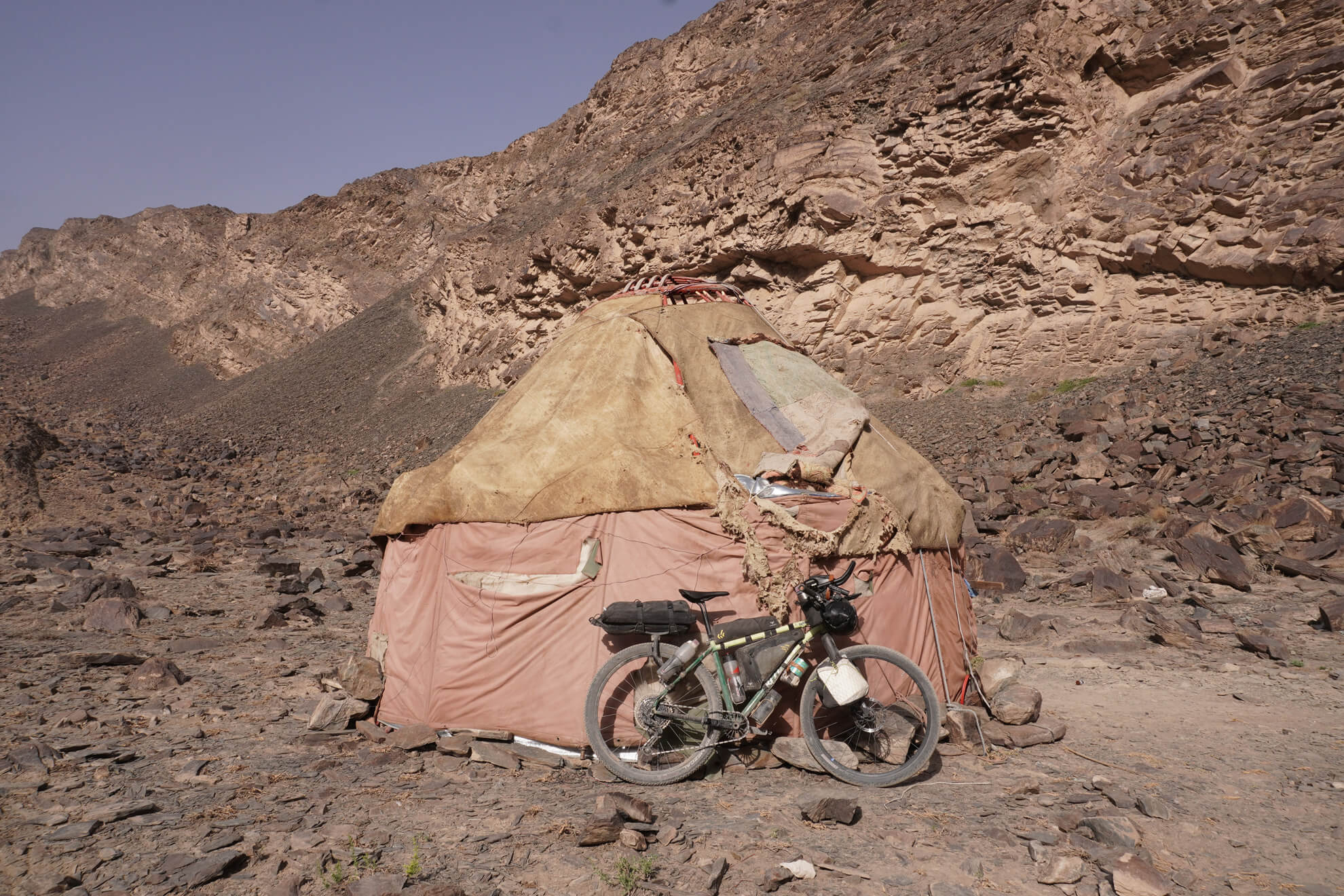
The violent Bartang River carves a deep scar between giant untouched peaks, and acts as a lifeline for a scattering of isolated villages. The river supplies the small settlements of small meadows, flowers, springs, and shrines that are scattered along its banks with everything they need to sustain life. But for most of the year, it destroys the road and cuts people off from the rest of the world.The Silk Road Mountain Race has tempted me back here but this time I was on a mission. The barren nature of Tajikistan contrasted with the lush wild fields and gigantic glaciers in Kyrgyzstan. Yurts scattered the land and a constant throng of trucks headed to the border. I got stuck at this dystopian border crossing, waiting for it to reopen. The kindness of locals put me up at a dirty little truck stop and gave me money for food but to say I was happy to leave was an understatement. China had always been the goal, and I was staring at it.

Not this time, China
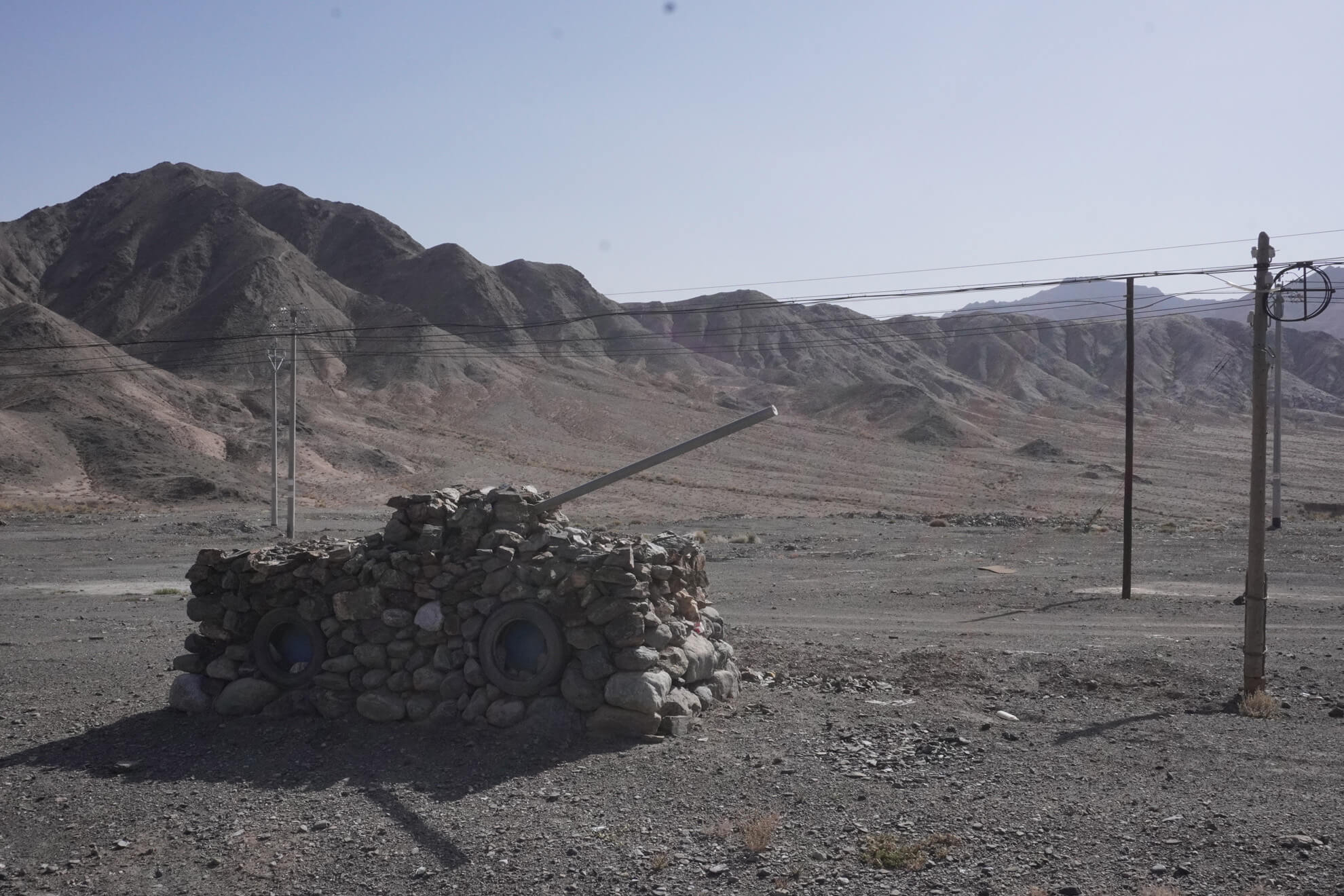
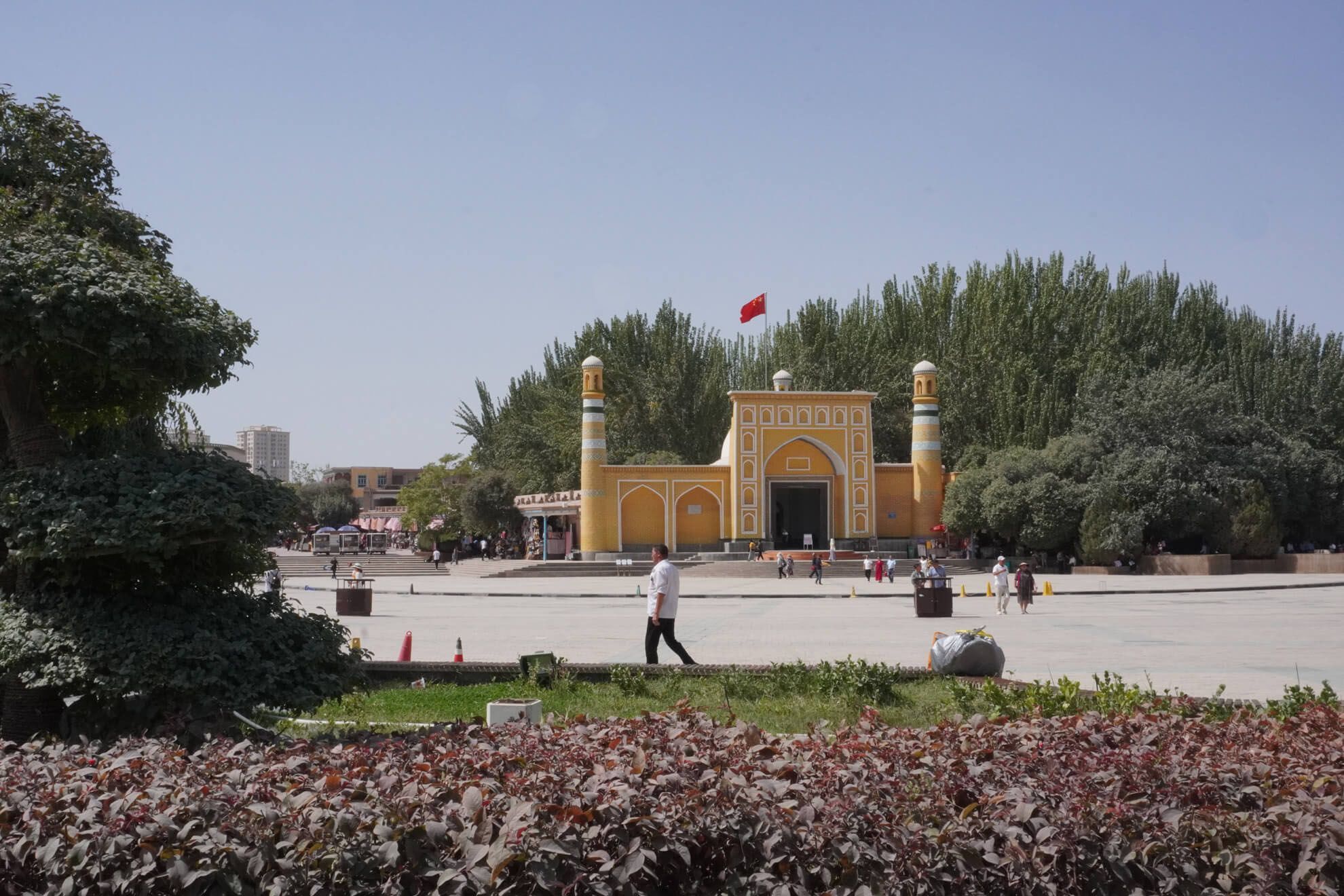
After military checkpoints and plenty of confusion I finally made it into China. Still unable to buy anything, I decided to get to Kashgar to sort it out — a mere 230 kilometers (143 miles) away. Little did I know there had been a time change and, as I got closer, there were checkpoints every 10 kilometers (six miles). As a foreign tourist in a highly militarized zone, you get stopped a lot. At one point, Komoot sent me down a road that led to what I can only describe as a rebellion military camp; it didn’t feel very official and I didn’t feel safe. I finally worked out how to use WeChat and booked a hotel just 30 kilometers (19 miles) short of Kashgar. The next day I cruised into the city. This was it — for all that worry, the Silk Road was over. China still excites me but not now; China will be a future trip rather than just passing through as fast as I can. I will ride around and explore the diversity of such an amazing land. I booked a flight to Shanghai where the team at Inselberg Equipment showed me around. A city that makes all others I’ve been to feel outdated, Shanghai was a surprisingly quiet green and pleasant waypoint where to rest before flying home.
Kiwi comes home
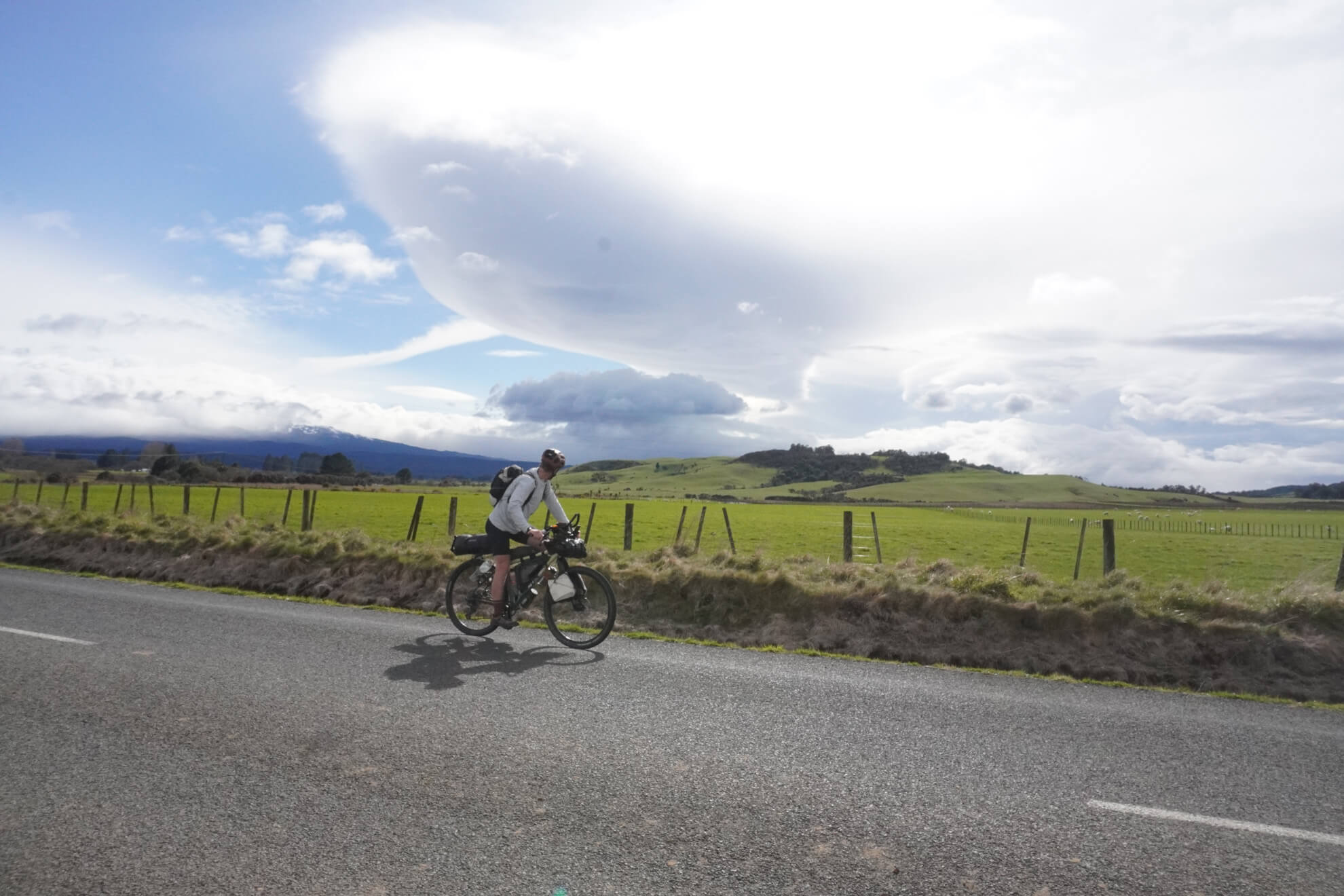
However, I still had to ride from Auckland to Wellington — just one last 820-kilometer (510-mile) route that ironically was the hilliest and most remote of all the places I’d been to. There were sections I rode that were 150 kilometers (93 miles) without water or resupply, and well, I absolutely loved it. Although living on an isolated island that’s slow to adopt new things can feel frustrating more often than not, it’s nice to be home. I now look forward to more adventures on home soil.
A ride like this can be eye-popping — especially when it’s stripped clean of preconceptions. It also holds a mirror to us and, while we can choose not to look — if we don’t look, we won’t see what others do. Liam’s ride won’t likely show up in any tri-fold travel brochures or high-end cycle touring offerings; how could it when its value is as unique as it is immeasurable?
Related articles
Join now for engaging stories, exclusive offers and product news delivered right to your inbox.